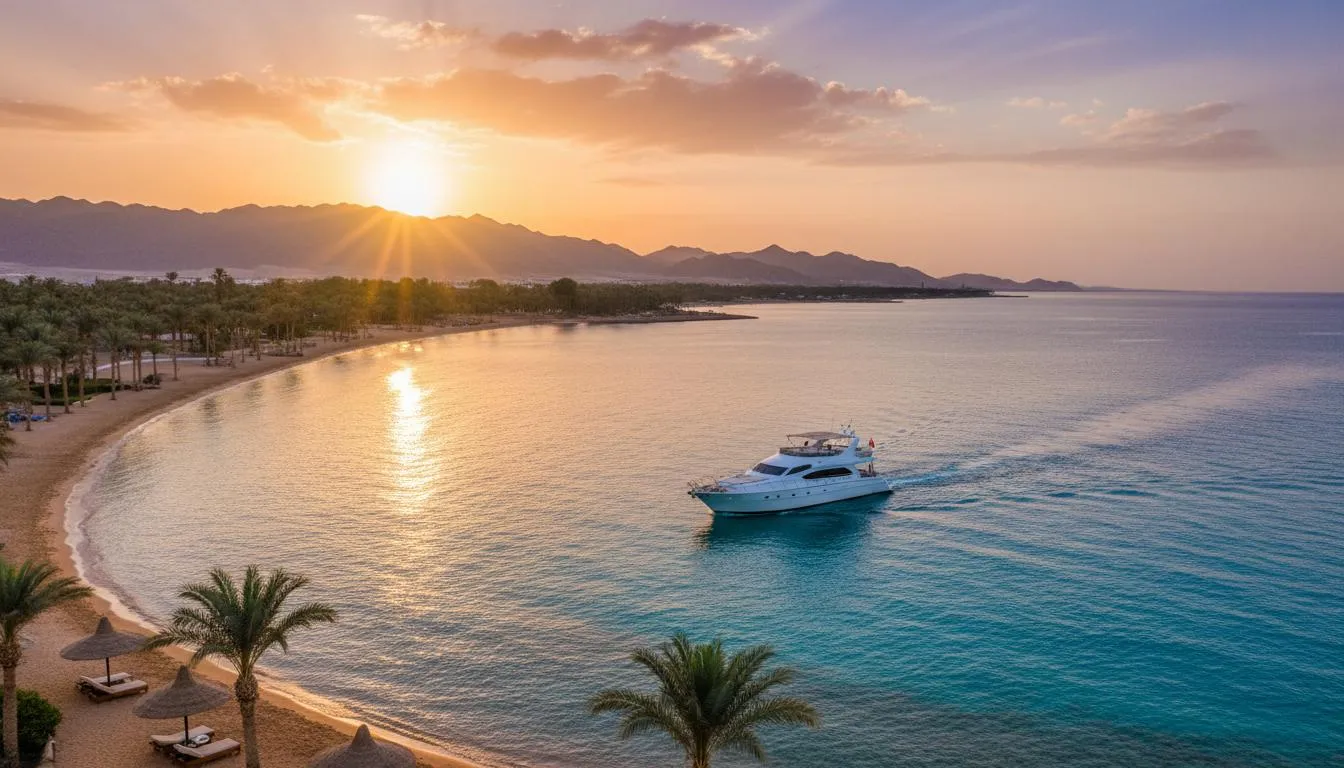
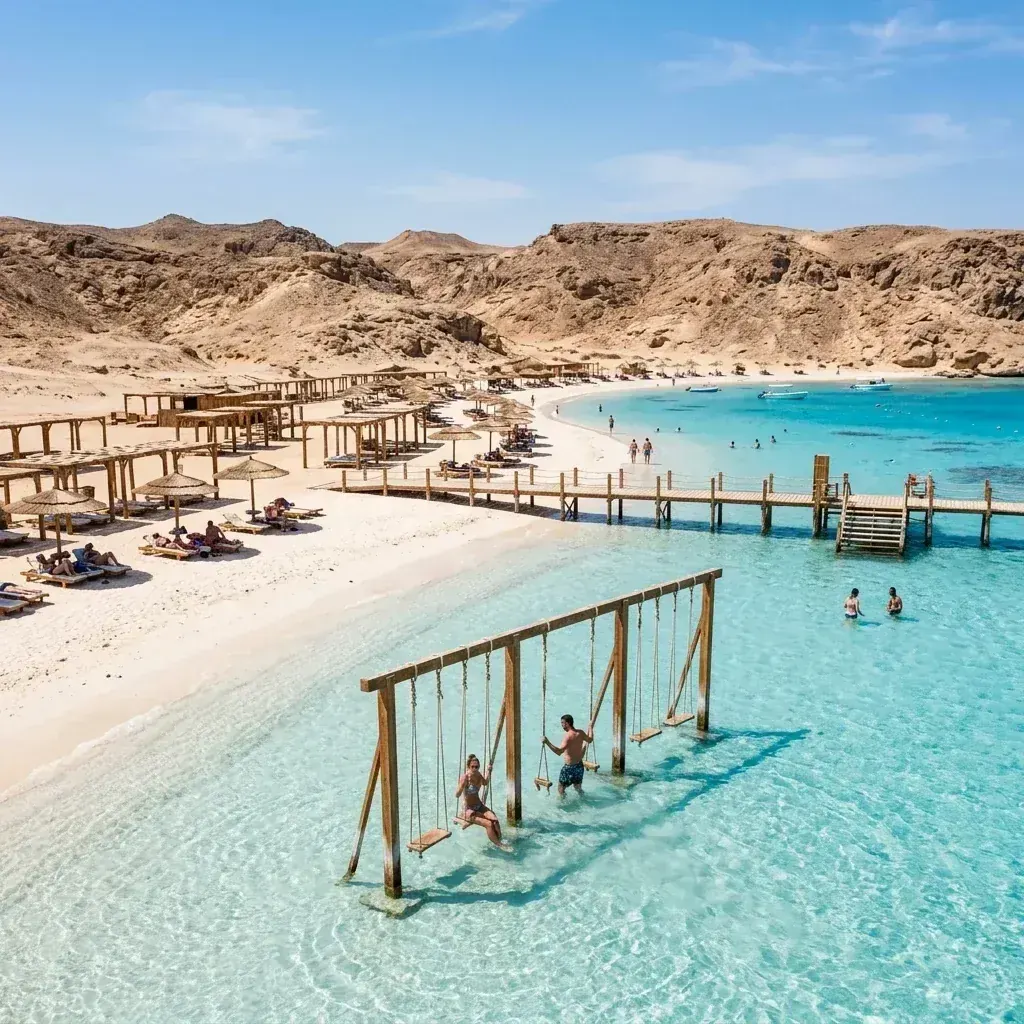
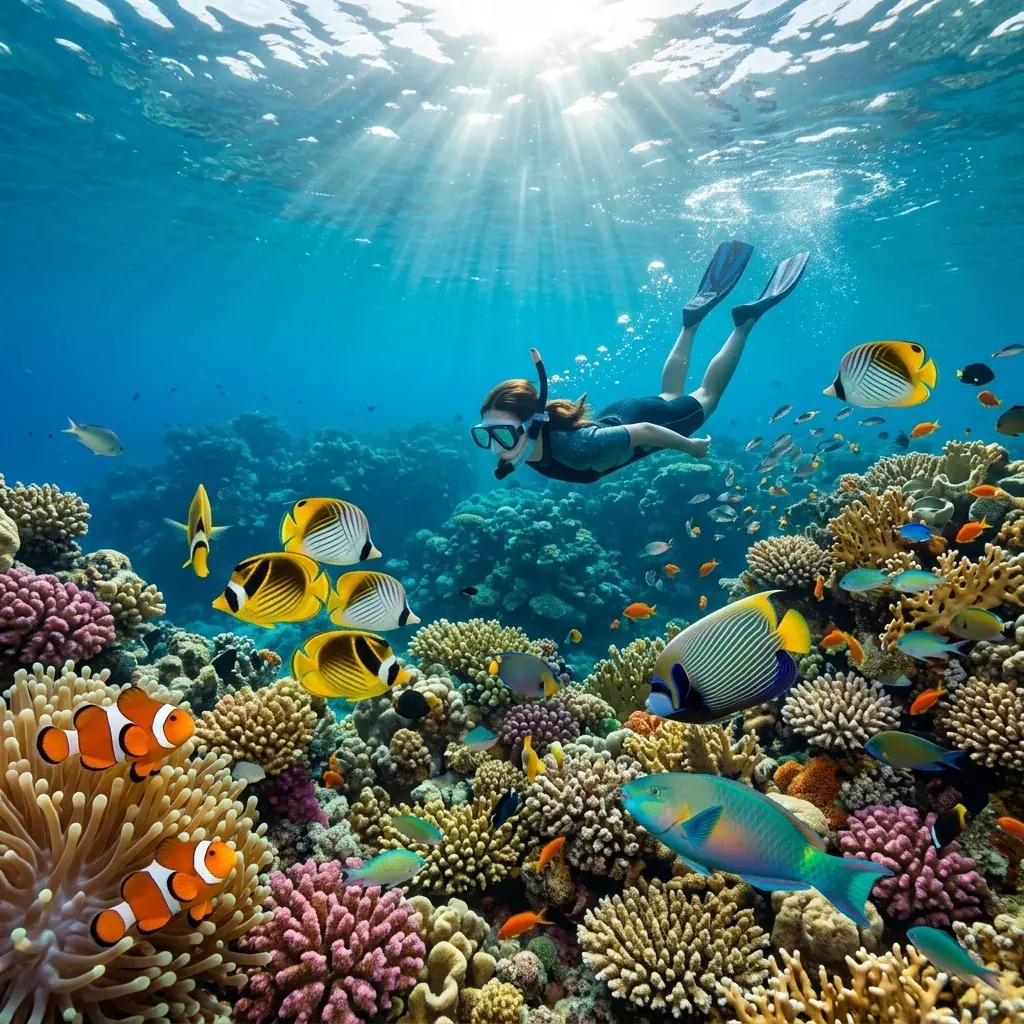
Hurghada has a dry climate. Rain is the exception, not the rule, and most visitors never see a wet day. That said, a low average rainfall does not mean disruption is impossible. The difference between those two statements is exactly what this guide is about: what the dry climate means in practice, what can still interrupt a plan and how to build a trip that a rare grey day cannot spoil.
What "dry" means in practice
A dry climate means your default expectation can be sun. The monthly weather table for Hurghada shows mild, sunny winters with daytime highs between 20.2°C and 25.4°C from November to February, and hot summers peaking at 34.5°C on average in August. Daylight runs from 10 hours 30 minutes in December to 13 hours 50 minutes in June. In a pattern like that, rain is not part of a typical day in any month. The climate sources behind these figures also note wind and occasional dust. In a dry region those two are more relevant to your plans than rain itself: wind can change what a boat day feels like, and dust can appear with it. Neither is a daily event, but both belong on your radar more than an umbrella does.
When rain can still happen
Low average rainfall is an average, not a schedule. A dry climate can still produce an occasional wet or unsettled day, and the honest planning position is the one our weather page takes: a monthly average is not a booking guarantee, a daily maximum or a safety assessment. The practical move is simple. Use the averages to choose your dates, then check the actual forecast and conditions near departure and before each activity, and follow the operator's instructions on the day. For island and reef outings, this matters a little differently: wind and sea conditions shape those days as much as any rain would, and operators confirm conditions trip by trip.
How to plan so weather cannot ruin the trip
The single best piece of advice from our weather guide is this: keep a buffer for weather-sensitive excursions rather than planning the only boat day at the end of your stay. If your snorkelling or island trip is on day two of five, a windy or unsettled day simply moves it. If it is on the last morning, the same weather cancels it. Beyond that, planning is light work. Book the sea days early in the stay, keep one flexible day, and check the forecast the evening before each excursion. That is the whole system.
What to pack for a dry climate
Sun protection belongs in the bag throughout the year: sunscreen, sunglasses and a hat, whatever the month. For winter trips, add layers. Winter days are mild and sunny, but evenings are cooler, and deck time on a boat feels cooler still. Those layers cover you for the odd breezy or dusty day too.
The year at a glance
Winter, from December to February, brings lower air averages and cooler evenings, with the sea between 22.5°C and 24.6°C. Spring and autumn are the comfortable middle, and April plus mid-October to mid-November are highlighted on our weather pages as useful periods for swimming, diving and sunbathing. Summer, June to August, has the highest air averages and the warmest water, up to 28.9°C in August. For the full monthly table, see our Hurghada weather by month page: and our best time to visit guide: Sea days worth keeping a buffer for include Orange Bay: Dolphin House: and, on the land side where wind and dust matter more than rain, the Super Safari:
Frequently asked questions
Does it rain a lot in Hurghada?
No. Hurghada has a dry climate and rain is the exception in every month. Most trips see no wet day at all.
Can rain still disrupt a Hurghada holiday?
A low average rainfall does not mean disruption is impossible. An occasional unsettled day can happen, and wind and occasional dust matter more than rain for most activities. Check the forecast near departure and follow the operator's instructions on the day of each excursion.
What is the best way to protect boat trips from weather?
Keep a buffer. Schedule weather-sensitive excursions early in your stay rather than planning the only boat day at the end, so an unsettled day moves the trip instead of cancelling it.
Do I need rain gear in Hurghada?
Pack for sun first: sunscreen, sunglasses and a hat all year. Add layers for winter evenings and deck time. Those layers, not rain gear, are what a rare grey or breezy day actually calls for.
Is wind a bigger issue than rain in Hurghada?
For most visitors, yes. The climate sources note wind and occasional dust, and for island and reef outings wind and sea conditions shape the day as much as any rain would.
When should I check the weather forecast?
Use monthly averages when choosing your dates, then check the actual forecast near departure and again before each activity. An average tells you what is typical, not what a specific day will bring.